Showing posts with label war movies. Show all posts

Sunday, December 18, 2016

Rogue One - Review

Image result for rogue one

This movie is a peculiar thing. It's the first time the Star Wars film franchise has stepped away from the main saga, but it's still very much concerned with the same set of events that occupied the Skywalker twins.

Sunday, November 27, 2016

Episode 44: Lord, Help Me Get One More

Image result for hacksaw ridge
After a brief discussion of politics and Batman, we jump into a review of Mel Gibson's new film Hacksaw Ridge and how it handles pacifism, conscience, violence, and point of view.

Wednesday, August 20, 2014

The Mirror - Zerkalo - (1975) - Movie Review

It’s much easier to respect Andrei Tarkovsky than it is to like him. My first introduction to his filmography was Stalker, a vaguely Soviet-period sci-fi philosophical road movie about three men and their journey into a mystical, Area 51-esque underworld called The Zone. The Mirror, on the other hand, mostly keeps its feet firmly on the ground. A semi-autobiographical story, it has a strong sense of historical place (Soviet Russia in the 40’s, 60’s and 70’s).  It feels like the more accessible of the two films, despite its complex, abstract nature, and it is a strange but chillingly beautiful movie.

The friend with whom I saw the film said it came into being because Tarkovsky was trying to exorcise his recurring dreams (he was successful.) It’s true, the story feels like a vast, puzzling experience of catharsis, though relief is mingled with the bittersweet dissatisfaction of loss.

The main character is Alexei “Alyosha”, a thinly veiled representation of Tarkovsky himself. Many of Alexei’s problems stem from his troubled past, and he (or the camera, at least) goes back to several periods in his life, attempting to untangle memory from truth. Tarkovsky’s tracking shots, moving slowly through the doors of a house, have an entrancing quality, drawing us into a world which feels four-dimensional, beckoning us inside a fully-realized, tangible space.

Thursday, July 10, 2014

Unbroken - Trailer

I'm sure you've all heard about the late Louis Zamperini in the last week...the Olympic runner, the WWII POW, the Christian missionary.

What you may not know is that his life story has been adapted into an upcoming movie, written by the Coen brothers, directed by Angelina Jolie. The cast is pretty obscure, but I've seen Domhnall Gleeson, Garrett Hedlund, and Luke Treadaway, supporting actors, in British films before (because this is me, remember.) Hopefully the Coens will save this from being a standard, rather dull inspirational film.

 Here's the trailer:


Hannah Long

Monday, June 30, 2014

Best of May/June 2014

Movies:
While I enjoyed two non-fiction thrillers in Captain Phillips and Valkyrie, it was a third (dubiously historical) film, A Man for All Seasons, that swept me away. Robert Bolt's witty, emotional play is an amazing political fable delivered via fiery, powerful dialogue from a stellar cast of Shakespeareans. I probably just used way too many adjectives, but what the heck, it's great. My review.

For June it's a narrow win for Babette's Feast over 12 Years a Slave. A lovely, meandering Danish film, Babette is one of the purest representations of joy that I've seen in a long time. There's also a lot about art, generosity, God, love, and food. Mostly food. This movie really enjoys food. Set in a gorgeous, barren landscape, Babette shows us those little tinges of grace - purple clouds, elegant cliffs, music, feasting, friendship, artistry. (For those who have seen Ordet, it reunites two cast-members 33 years later.) My review.
TV:
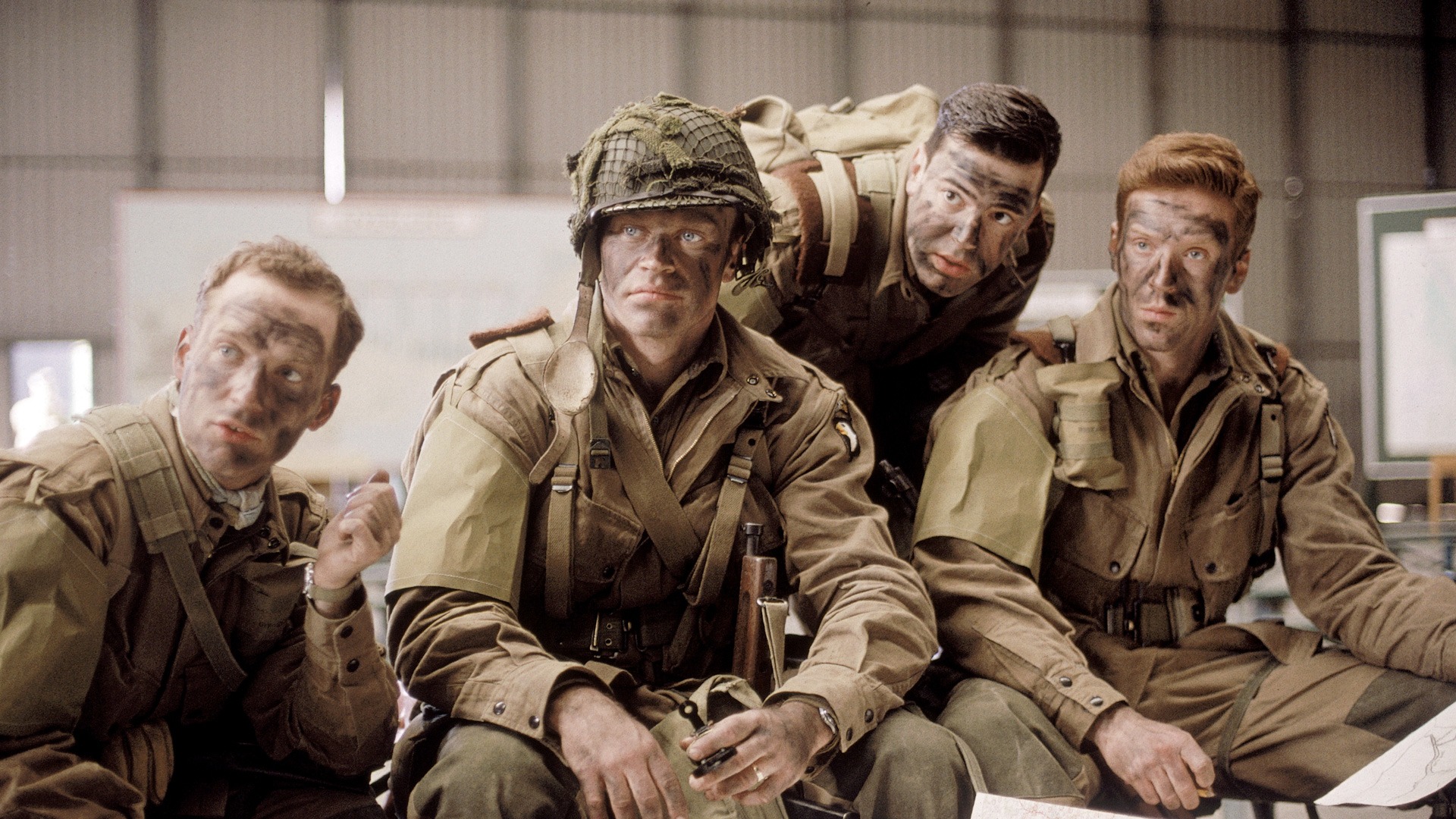
While Band of Brothers didn't affect me in the way it should have - emotionally - it's impossible not to respect the immensity of it. An enormous cast, impeccable production values, and gorgeous cinematography allow it to easily rival any big-budget Hollywood WWII flick. The few actors I kept track of among the chaos were superb, and it's fun to spot cameos from future stars (Andrew Scott, Tom Hardy, James McAvoy, Jimmy Fallon...) The neatest thing is that it's all true; the men really existed. My cousin even knew one of them. My review.

Michael Gambon always adds an aura of class to a film, and these atmospheric, charming adaptations of Georges Simenon's Maigret novels are no exception. Shipping English actors overseas to play foreign characters only works sometimes, but this series pulls it off flawlessly, as it also does with the 1950s noir style. Gambon plays Inspector Jules Maigret, a burly, vague, quirky, intelligent sleuth. Like the Maigret of the novels, Gambon doesn't go for the more sleek, sexy attraction of a genius like Holmes, but a quietly endearing Everyman, empathizing with the beleaguered Parisian working classes, seeking justice in a morally gray world.
Hannah Long

Wednesday, June 18, 2014

The Book Thief - Movie Review

Like Life is Beautiful, this is a movie that succeeds mostly on charm. And despite my bone-deep cynicism about almost everything, The Book Thief crept under my guard. True: it's a story-book vision of a fairy-tale Germany, complete with WWII movie conventions from a different age - hidden Jew, book-burning, over-the-top score, stodgy, sanitized settings - but it turns these things to its advantage, creating not a children-in-wartime film, but a children's film. While the setting is somewhat idealized, I found it beautiful enough to sweep away concerns about realism.

It's based on a book:

Liesel Meminger is a young girl in World War II Germany, who steals her first book from the frozen graveside of her brother. Abandoned, she is taken in by a pair of quirky but affectionate foster parents, with whom she is to endure the war. Her love of words and stories gives her hope in a world where childhood is quickly unraveling.

Saturday, May 31, 2014

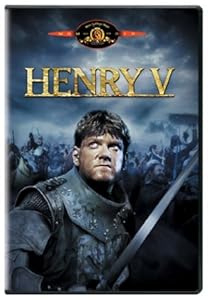
Henry V (1989) - Movie Review


When Henry V debuted in 1989, 28-year-old director and star Kenneth Branagh was hailed as the new Olivier. It was something of a premature announcement, but not unwarranted. Twenty-five years later, it’s still Branagh’s best movie, even if he did improve in subsequent films. For instance, Henry V’s beginning is weighed down by dull politics and difficult language (though Derek Jacobi’s opening monologue is inspired,) and Much Ado About Nothing, by contrast, improves in clarity. But Branagh proved to suffer from Peter Jackson Syndrome: his judgment clouded by fame and large budgets.

As a Shakespeare fan, I’m nowhere near expert. Henry V is my favorite movie adaptation of The Bard, and my inexperience may partly be the reason—for it is both accessible in its raw, visceral emotion and complex in its treatment of the subject material. Still, I'd definitely recommend this one to those who have read the play, for it often opts for emotion over simplicity.

A plot summary really ought to be superfluous, but Henry V isn’t actually as familiar on a cultural level as Julius Caesar or Romeo and Juliet. In brief, it’s the tale of a young medieval king who led his country to war against France, narrated by a snazzily-dressed Derek Jacobi, and featuring the best pre-battle pep talk of all time.

“We few, we happy few, we band of brothers.” That one.


Monday, May 26, 2014

Band of Brothers - Review

A lavish, moving drama centering around a ragtag band of soldiers fighting their way across Europe, Band of Brothers is an incredible testament to the bravery and ingenuity of the WWII military. From a technical standpoint, it's astounding - easily equal to most big-budget films, and often better. The settings, music, sound-mix, acting - everything combines to form an amazing period piece.

On the other hand, the story-telling itself has some issues. For one thing, like in Saving Private Ryan, I had a lot of difficulty keeping up with the varied members of the humongous cast. This made it much harder to empathize with those that lived or died. Many times I found myself asking "Wait, was that ____ who just died?" or "Has ____ been here the whole time?" It isn't helped by the fact that there are frequent new faces as replacements fill the ranks, and who sometimes act as protagonist for an episode. A heavy dose of action (exquisitely filmed and executed) early in the series also distracts from character development, and in the end I could number very few of the men by personality rather than name.

Sunday, May 25, 2014

Valkyrie - Movie Review

World War II is Hollywood’s favorite war. Complete with a plethora of extraordinary makeshift heroes, it also provides our favorite touchstone for absolute evil: the Nazis. We can safely hate the Nazis.

Except we can’t. While there were, unquestionably, truly depraved Nazis (just mention the named Oskar Dirlewanger and I shudder,) there was also a significant German underground resistance. Many Christians broke from the official Reichskirche to form their own free church. This opposition extended into the highest echelons of the government—many military leaders despised and distrusted Hitler.

But Hollywood’s record hasn’t been stellar when it comes to recognizing this. Needless to say, when Valkyrie—an account of the German attempt to assassinate Hitler—was announced there was significant worry from Germany that this production would slip into the same mistake. It wasn’t helped when Tom Cruise was cast as the hero, Colonel Claus Philipp Maria Schenk Graf von Stauffenberg, a German aristocrat with a pedigree even longer than his name.

But this worry was misplaced. 

Thursday, May 15, 2014

Rescue Dawn - Movie Review

Rescue DawnRescue Dawn is an interesting, surprisingly apolitical war film about the escape of Vietnam POW Dieter Dengler, played by Christian Bale. In many ways, it feels like it could be the unofficial sequel to Bale's first film, Empire of the Sun - in which he was a young child, Jim Graham, in wartime - wanting to fly a plane. If he impersonated a German American and joined the U.S. Air Force, I could easily see Dengler being the grown-up Jim Graham. The instant he's in the rain-forest, Dieter takes charge - building makeshift shelters and foraging for food and water. We're not really given any explanation for this unusual skill or hardiness, just as we know little about Dieter's life outside, beyond a few reminiscences to fellow POWs (my explanation is a childhood in Soochow with Jim Malkovich's Basie.)

While shot beautifully in lush jungles, featuring several terrific actors (Bale is great as usual, as are Steve Zahn and Jeremy Davies), it ultimately feels rather empty. Partly this is because Dieter never seems to fail at anything until near the end of the film. Looking for food? There it is. Need to avoid the guards? They look the other way. It ruins all sense of tension or risk. The director commented on Dieter's illogical optimism being his greatest asset, but given how seldom he fails, this optimism seems to be mere logic.

Thursday, February 13, 2014

Empire of the Sun - Movie Review

If you haven’t heard of this movie, don’t feel bad. Part of my affection for it may be the fact that it’s one of Steven Spielberg’s little-known masterpieces, hiding in the dusty corners of his 50-film history. It is based on J.G. Ballard’s novel Empire of the Sun, a semiautobiographical story of his childhood in China. Ballard’s stand-in is Jamie, a spoiled young Brit living in the wealthy International Settlement, the only sector of Shanghai which the Japanese have not occupied. When, after Pearl Harbor, the Japanese invade, Jamie and his parents are separated, and he is thrown into a world for which he is totally unprepared. For him, this is the real start of World War II.

I think Empire of the Sun is a movie that splits opinions. A lot depends on expectations. It might style itself as a historical epic, or a commentary on war or race or other abstractions, but it’s really about a little boy. It is not plot-driven but character-driven, like Lawrence of Arabia, it is a very long, slow film in which the plot is really the hero. If one cannot empathize with Christian Bale’s Jamie Graham, the entire movie falls apart.

I’ve never had trouble with that. Jamie is, to me, a fascinating character. He is spirited and imaginative, with a comic, conceited naivety that only children with posh English accents can achieve. Thirteen-year-old Christian Bale is extraordinary, throwing his entire heart into the character and delivering one of the greatest child performances of all time.

Thursday, January 30, 2014

Saving Private Ryan - Movie Review


Steven Spielberg has always had a penchant for the grandiose. It is very much on display in Saving Private Ryan, both in the enormous scope of the project and the scale of violence. At the time of its release, this film was hailed as markedly graphic. Watching it today, after the last decade of Tarantino and the desensitization that accompanies that, it's hard to comment, but it is still shocking and unlike films like Braveheart, it imbues every death with importance, even those of faceless soldiers on the beaches of Normandy. 

Certainly unlike Braveheart, it has enough respect for the enemy to not draw them as one-dimensional Disney villains. They are Nazis, but they are human beings. (It was clear, to me at least, that the one cruel decision made by a Nazi was impersonal and almost accidental, once again driving home the point that in wartime, there is no time to stop and think, to pause and pick out one man in the mayhem.)

Sunday, January 19, 2014

Star Trek Into Darkness - Movie Review

Full disclosure: I've never watched a full episode of Star Trek. I've never watched a Star Trek movie. Really, the only exposure I've received is through cultural references - I know of the Klingons, I know a good deal about Spock, I know William Shatner couldn't act, and I know of the U.S.S. Enterprise and its mission to boldly go where no man one has gone before. I've heard "Beam me up, Scotty" and "Dammit, Jim, I'm a doctor, not a ____" and "Resistance is futile" in many forms. I even know the famous climax of the Wrath of KHAAAAAAN.
So I do recognize that part of my dissatisfaction with this movie is that I miss some of the in-jokes, and the whole mythos that is Star Trek. But I don't think that's the only thing. After all, I thought a lot of the humor was quite funny. But Star Trek Into Darkness's greatest flaw is the lack of real character development. It starts off with promise, and themes quickly emerge as, following an action-packed opening sequence, Captain Kirk (Chris Pine) places the entire crew at risk to save one member, Spock (Zachary Quinto), who is protesting the motion even as it is enacted. Thus is opened a conversation on sacrifice and responsibility.

This film could have been Master and Commander in space. It could have been a chance to teach the devastating consequences of reckless action and the value of making tough decisions, and at first, it seemed like we may be treated to a coming-of-age story with pretty boy Kirk, but his refusal to make hard choices - a prerequisite to being a captain - is only seen as a weakness, despite its necessity. Spock, in other words, is right. Just because it bruises the fragile feelings of the Enterprise's supermodel crew doesn't mean it's the wrong thing to do. This simple observation slips by the wayside as we are thrown into a typical science fiction plot, packed with technical jargon and delusions of grandeur, in this case supplemented by a variety of throwback jokes and a strained attempt at a brotherly bond between Kirk and Spock.

Wednesday, January 8, 2014

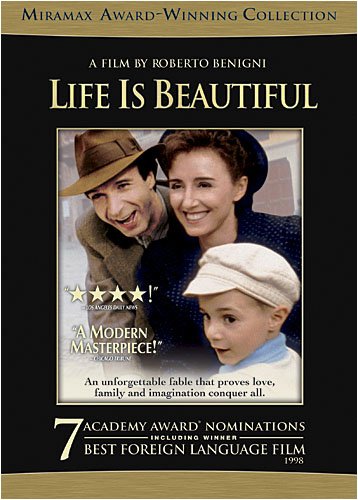
Life is Beautiful - Movie Review

The last three movies I've watched have curiously prepared me for this one, which I finished Monday. To End All Wars was a WWII film, taking place in a camp of sufferers. The Scarlet and the Black was about a resistance movement in Nazi Rome. Kind Hearts and Coronets was a film from the 1940's.

Life is Beautiful takes elements from all of these and improves on them, being a WWII tale set in Italy with a 1940's style of filming. Mark Twain once said "the personages in a tale [should] be alive, except in the case of corpses, and...the reader shall be able to tell the corpses from the others." In Life is Beautiful, unlike To End All Wars, a vast amount of time is spent in ensuring the life of the characters, before even a shadow of death darkens the horizon.

The Scarlet and the Black strove both for an amusing main character and menacing villains, but both efforts failed. Life is Beautiful excels in both directions, always evoking the correct response.

Sunday, December 29, 2013

The Scarlet and the Black - Movie Review


Gregory Peck, Christopher Plummer, and John Gielgud all in one film? Yes, please.

I came across this 1981 made-for-TV movie during my NaNoWriMo research on WWII. Necessarily, I read about a number of fascinating resistance groups. There was Dietrich Bonhoeffer and the Valkyrie Plot, Sophie and Hans Scholl and the White Rose, Corrie ten Boom (of The Hiding Place fame,) and, one of most fascinating, Hugh O'Flaherty, the Vatican Pimpernel.

The Scarlet and the Black is a dramatization - no, that's the wrong word - it's an account of Monsignor O'Flaherty's many adventures during the war. O'Flaherty (Gregory Peck) was an Irish priest, an excellent golfer, and a master of disguise. He saved over 6,500 people during the war, earning him the nickname of "The Scarlet Pimpernel of the Vatican." He even had his own personal Chauvelin to play arch-nemesis, SS-Obersturmbannfuhrer Herbert Kappler (Plummer), a callous war-criminal.

Friday, December 27, 2013

To End All Wars - Movie Review

As a Christian, I always enjoy a movie that features questions about the infinite, and To End All Wars certainly does that. It has wonderful ingredients. A good premise, decent production values, and great music. Several very prestigious cast members (Robert Carlyle, Kiefer Sutherland, James Cosmo and Mark Strong being the best), do their best with less than intriguing characters.

It goes to show that just because a movie is rated R and features brutal violence, doesn’t mean it can’t be preachy. Immediately, after a brief, clumsy introductory sequence narrated by Ciaran McMenamin (inexplicably casted as the main character) we are plunged with the small band of Scottish soldiers into a 1942 Japanese POW camp. We know nothing about these soldiers, and for the rest of the movie, we don’t learn anything else. That’s almost true. They have little to no personality, and as Mark Twain pointed out, it's hard to care about the death of a character who never lived in the first place. Briefly, I was interested in Robert Carlyle’s conflicted Major Campbell, but he quickly morphed into a predictable character with a foreseeable end.